[ad_1] One way in which I think current AI models are sloppy is that LLMs are trained in a way that messily merges the following "layers":The "dream machine" layer: LLMs are pre-trained on lots of slop from the internet, which creates an excellent "prior". The "truth machine": LLMs are trained to "reduce hallucinations" in a variety of ways, including RLHF and the more recent reasoning RL.The "good machine": The same
[ad_1] Catch up on every session from the Generative AI Summit Austin with sessions from the likes of DLA Piper, Wayfair, Vellum and many more. [ad_2] Source link
[ad_1] This post was written with Dian Xu and Joel Hawkins of Rocket Companies. Rocket Companies is a Detroit-based FinTech company with a mission to “Help Everyone Home”. With the current housing shortage and affordability concerns, Rocket simplifies the homeownership process through an intuitive and AI-driven experience. This comprehensive framework streamlines every step of the homeownership journey, empowering consumers to search, purchase, and manage home financing effortlessly. Rocket integrates home
[ad_1] Providing effective multilingual customer support in global businesses presents significant operational challenges. Through collaboration between AWS and DXC Technology, we’ve developed a scalable voice-to-voice (V2V) translation prototype that transforms how contact centers handle multi-lingual customer interactions. In this post, we discuss how AWS and DXC used Amazon Connect and other AWS AI services to deliver near real-time V2V translation capabilities. Challenge: Serving customers in multiple languages In Q3 2024,
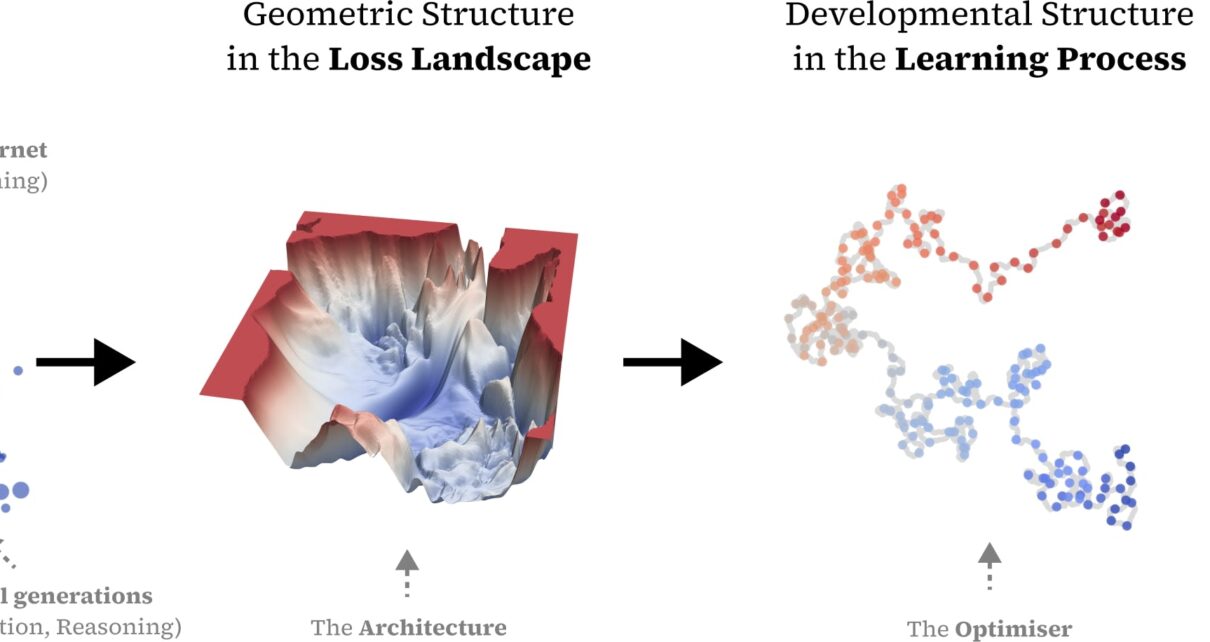
[ad_1] TLDR: We made substantial progress in 2024:We published a series of papers that verify key predictions of Singular Learning Theory (SLT) [1, 2, 3, 4, 5, 6].We scaled key SLT-derived techniques to models with billions of parameters, eliminating our main concerns around tractability.We have clarified our theory of change and diversified our research portfolio to pay off across a range of different timelines.In 2025, we will accelerate our research
[ad_1] (Audio version here (read by the author), or search for "Joe Carlsmith Audio" on your podcast app.This is the second essay in a series that I’m calling “How do we solve the alignment problem?”.[1]I’m hoping that the individual essays can be read fairly well on their own, but see this introduction for a summary of the essays that have been released thus far, and for a bit more about the
[ad_1] My goal as an AI safety researcher is to put myself out of a job.I don’t worry too much about how planet sized brains will shape galaxies in 100 years. That’s something for AI systems to figure out.Instead, I worry about safely replacing human researchers with AI agents, at which point human researchers are “obsolete.” The situation is not necessarily fine after human obsolescence; however, the bulk of risks
[ad_1] Foundational models (FMs) and generative AI are transforming how financial service institutions (FSIs) operate their core business functions. AWS FSI customers, including NASDAQ, State Bank of India, and Bridgewater, have used FMs to reimagine their business operations and deliver improved outcomes. FMs are probabilistic in nature and produce a range of outcomes. Though these models can produce sophisticated outputs through the interplay of pre-training, fine-tuning, and prompt engineering, their
[ad_1] This technology is being used to identify fake photos. An AI-powered tool called Photoshop Detector can recognize and detect a variety of objects, patterns, pictures, and more. The system uses a lot of data, objects, or photos to learn for this goal. In this manner, the system will use its observations and learnings to identify the object and photographs.Additionally, the picture Photoshop detector offers itself as a safe substitute
[ad_1] With many thanks to Sasha Frangulov for comments and editingBefore publishing their o1-preview model system card on Sep 12, 2024, OpenAI tested the model on various safety benchmarks which they had constructed. These included benchmarks which aimed to evaluate whether the model could help with the development of Chemical, Biological, Radiological, and Nuclear (CBRN) weapons. They concluded that the model could help experts develop some of these weapons, but